
The Complete Guide to Eloping in Santorini & the Greek Islands
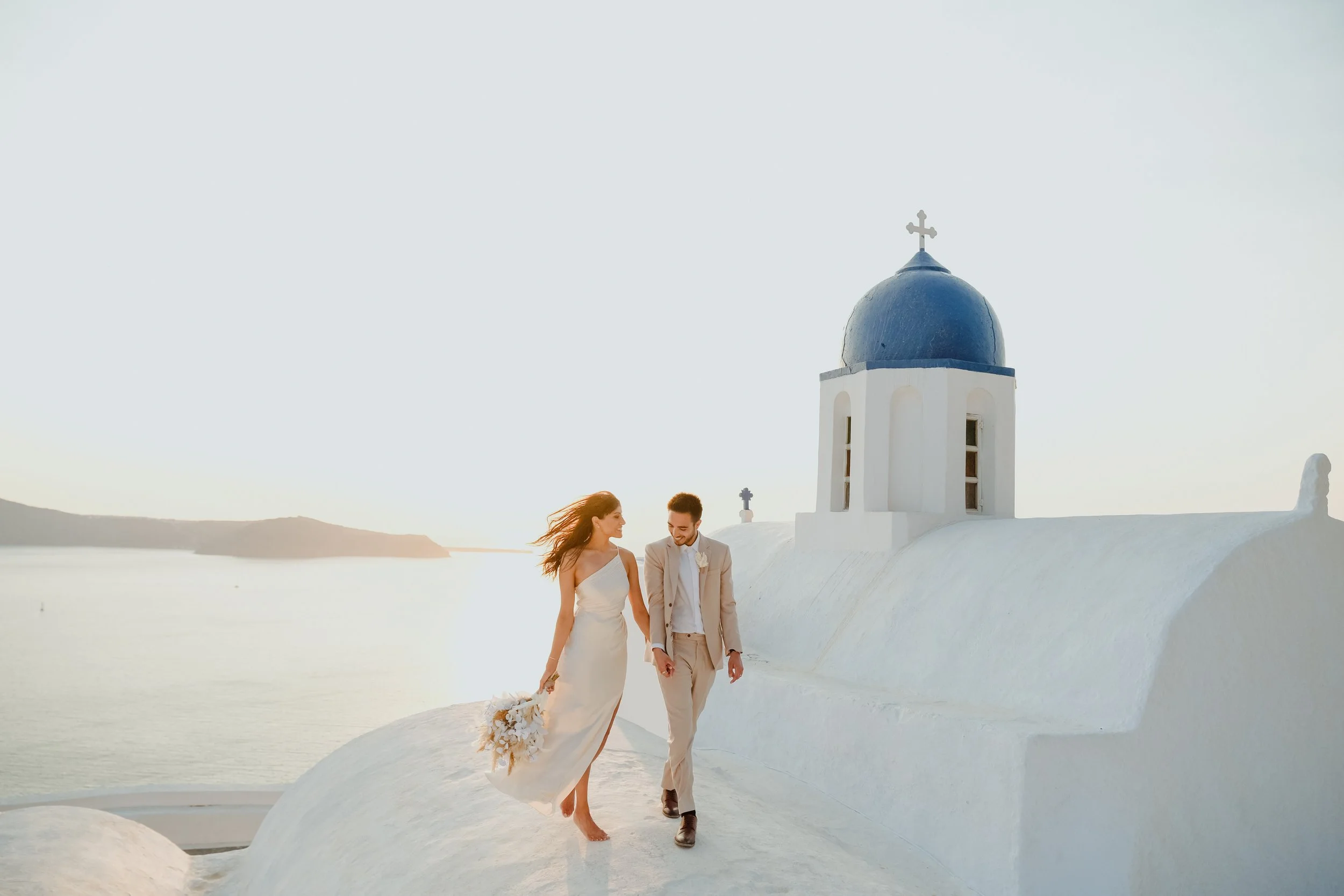
Eloping in Santorini sounds simple until you start planning it. Which month actually has the best light? Do you need a marriage license, or just a ceremony? Is it worth adding a second island, and if so, how do you actually get there?
We've photographed elopements across Santorini, Milos, Ios, Paros, and beyond, and this guide answers the questions couples ask us most — before you ever reach out. Use it to plan your timeline, your paperwork, and your islands. Then, when you're ready to talk locations and photography, we are here!
When to Elope in Santorini
A Month-by-Month Breakdown
Most guides just say "May, June, September, October" and move on. Here's the actual trade-off for each window, based on what we see on the ground every season.
April – early May
Wildflowers, green caldera slopes, and noticeably thinner crowds in Oia. The trade-off: the sea is still cold (not a swim-after-ceremony kind of warm), and the weather is the least predictable of the warm months — pack a backup indoor or covered option into your timeline.
Mid-May – June
Our pick for most couples. Warm but not punishing, long golden-hour windows, and Oia hasn't hit full peak-season density yet. Light in late May has a clarity that gets hazier as summer goes on.
July – August
Santorini at its busiest. The famous sunset spots in Oia are genuinely crowded — this is the season where pre-scouted, less-obvious locations matter most for an intimate elopement feel. Heat is intense midday; ceremonies are best planned for early morning or the two hours before sunset. Book everything (photographer, ferries, dinner reservations) 3+ months out.
September – early October
The other favorite. The sea is at its warmest, crowds thin out noticeably after the first week of September, and the light turns softer and more golden than peak summer. Many photographers (us included) consider this the best stretch of the year for a Santorini elopement.
Late October – November
Quiet, moody, atmospheric — but the Meltemi winds can pick up, and ferries to nearby islands are less frequent and more weather-dependent. Good for couples who want solitude over guaranteed sun.
Winter (December – March)
Santorini essentially goes to sleep. Many restaurants and hotels close. It can be beautiful and starkly quiet if that's your vision, but plan everything — vendors, venues, even taxi availability — well ahead, and build in flexibility for weather.
Is Your Marriage Legally Binding?
Greece's Paperwork, Explained Simply
This is the part most couples are anxious about, and most elopement guides gloss over it. Here's the real process, current as of 2026 — though we always recommend double-checking specifics with your municipality or embassy, since requirements can shift slightly by nationality and town.
The two paths
1. Legally marry in Greece. Your marriage is recognized worldwide under most countries' "place of celebration" rule — the U.S., U.K., Canada, Australia, and EU states generally accept a Greek civil marriage without re-registering it at home.
2. Symbolic ceremony in Greece, legal paperwork at home. You handle the legal marriage through your home country (often a quick courthouse visit before or after your trip), then have a completely unrestricted, paperwork-free ceremony in Santorini — exactly where you want, with no notice periods or translated documents required.
A large number of the couples we work with choose option 2. It removes every logistical headache below and lets your elopement location be chosen purely for the view, not for which municipality can legally marry you.
If you do want to legally marry in Greece, here's what's generally required:
- Valid passports for both partners
- Birth certificates, apostilled (or legalized) and officially translated into Greek
- A Certificate of No Impediment / Affidavit of Marital Status confirming you're free to marry — obtained from your embassy or consulate, notarized and translated
- Divorce decree or death certificate (translated, apostilled) if either of you was previously married
- A marriage notice published or posted in Greek at the municipality, required several days before you can apply
- Application submitted in person at the municipality where you'll marry
Timeline: the marriage license is typically issued about a week after your documents are submitted, and it's valid for six months. After the ceremony, Greek law requires the marriage to be registered at the local Vital Statistics Office (Lixiarcheio) within 40 days.
The honest bottom line: the documents aren't complicated individually, but the apostille-and-translation process takes real lead time — start at least 2-3 months out if you want a legal Greek wedding. If your timeline is tighter than that, the symbolic-ceremony route is usually the better fit, and it's just as meaningful — the legal part is paperwork; the wedding is the day itself.
This section is for planning purposes and isn't legal advice — for your specific situation, check with your embassy or the municipality where you plan to marry.

Choosing Your Island: Santorini vs. Milos vs. Ios vs. Paros
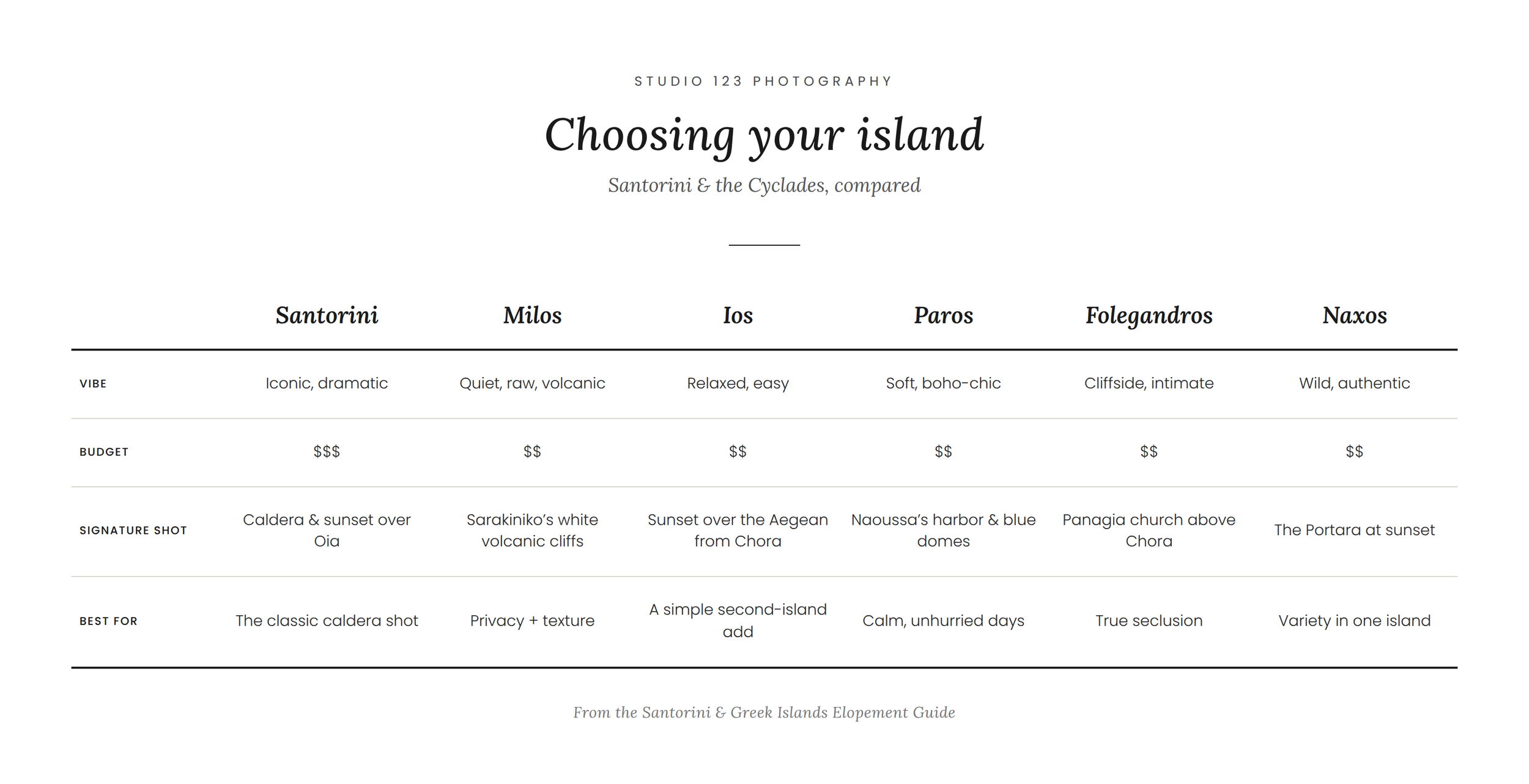
Santorini gets the search traffic, but it isn't automatically the right fit for every couple. Here's how we'd actually describe each island to a couple deciding where to elope.
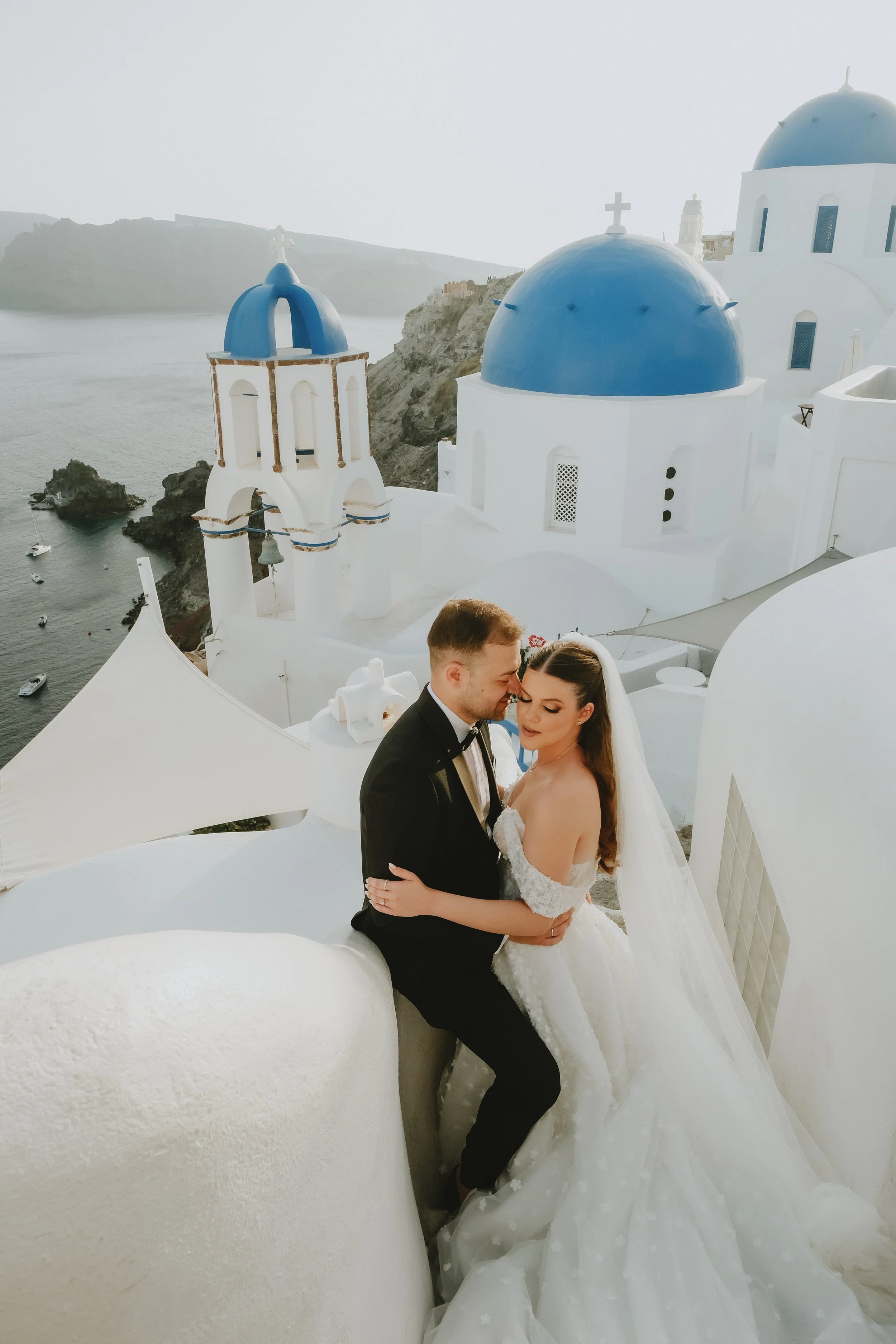
Santorini — the iconic choice. Caldera views, the white-and-blue architecture you've seen a thousand times on Pinterest, and genuinely the most dramatic sunset in the Cyclades. Best for couples who want that unmistakable backdrop and don't mind sharing the island with other visitors, especially in peak season. Oia is busiest; Imerovigli is quieter with nearly the same view; Fira has more everyday energy.
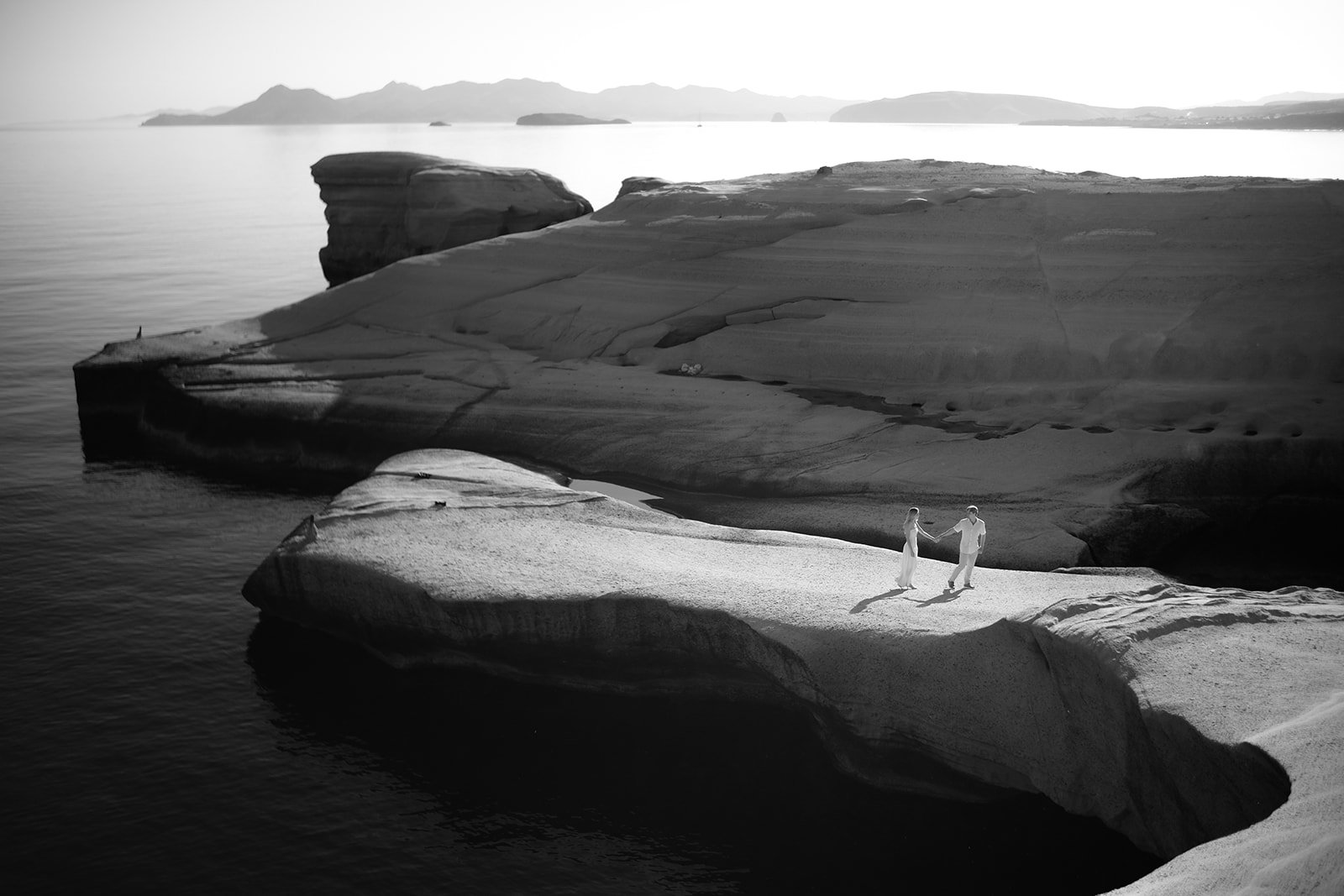
Milos — the quieter alternative with the same DNA. Same whitewashed-village beauty, dramatically fewer people. Volcanic landscapes, sea caves, and the otherworldly Sarakiniko beach give a very different visual texture than Santorini's caldera shots. Best for couples who want privacy and don't need the specific caldera-view shot. Check our Milos Elopement Guide for more information
Ios — the closest, easiest add-on. Just 45 minutes by ferry from Santorini, making it the simplest second island to add without eating your whole trip in transit. Quieter beaches, a relaxed hilltop town, less polished than Santorini but very photogenic in its own right.
Paros — soft, boho, and unhurried. Whitewashed villages, blue-domed chapels, and a noticeably calmer pace than Santorini even at the height of summer. A favorite for couples who want the Cycladic look without Santorini's crowds or price tag.
Island-Hopping Logistics: Ferries, Timing, and What Nobody Tells You
If you're considering a multi-island elopement, logistics make or break the experience. Here's what actually matters:
Ferry times from Santorini (high season, high-speed where available):
- Ios — as little as 45 to 75 minutes, up to ~7 daily crossings. The easiest connection from Santorini, hands down.
- Milos — roughly 2 hours direct in high season (1-2 daily crossings); off-season can stretch to several hours with fewer sailings.
- Paros — about 1.5 to 5 hours depending on the vessel, with up to 8 daily crossings in summer.
- Naxos — roughly 1 to 2.5 hours, with frequent daily service.
What we tell every couple planning a multi-island elopement:
- Athinios Port is not Fira. Santorini's ferry port is a 20-minute drive from the main towns — budget real transfer time, especially with wedding-day items in tow.
- High-speed vs. conventional isn't just about time. High-speed catamarans cut travel time significantly but only have indoor seating and can feel rougher in wind. Conventional ferries are slower but more comfortable if the sea is choppy — a real consideration during the Meltemi winds (July–August).
- Book ferries 3+ weeks ahead in July and August. Popular routes do sell out in peak summer.
- Fewer islands, more time, less stress. It's tempting to plan three islands in five days. We almost always recommend two at most for an elopement — the goal is presence, not a transit schedule.
- Luggage is genuinely your problem. No porter service at most ferry ports. If you're bringing a wedding dress or suit, plan for how it travels, not just how it photographs.

How Much Does a Santorini Elopement Actually Cost?
One of the first questions couples ask when planning a Santorini elopement is, "How much should we budget?" The short answer is: it depends.
Your total investment will vary based on the time of year, the number of guests, your choice of accommodation, and whether you're planning a simple sunrise ceremony for two or a multi-day celebration with family and friends.
For most intimate elopements in Santorini, your budget will typically be divided into the following categories:
Photography
Photography is often the largest investment, and for good reason. Rather than simply documenting the ceremony, many couples choose coverage that includes getting ready, a sunrise or sunset portrait session, or even a multi-day adventure across different Greek islands.
Our photography collections range from a few hours of coverage to immersive multi-day experiences designed around your story.
Legal Marriage Paperwork
If you're planning a legally recognized Greek marriage, you'll also need to budget for document translations, apostilles, and official certifications before arriving in Greece. While the exact cost depends on your home country, most couples spend a few hundred euros (or dollars) on the complete paperwork process.
Many international couples choose to complete the legal marriage at home and enjoy a symbolic ceremony in Santorini instead, which simplifies the planning considerably.
Accommodation
Accommodation is one of the biggest variables in your budget.
Santorini's famous caldera-view hotels are among the most expensive in Greece, particularly from May through September. If you're dreaming of a luxury cave suite with a private infinity pool, expect accommodation to represent a significant portion of your overall budget.
If you're open to exploring beyond Santorini, islands like Milos or Paros often offer comparable boutique hotels and breathtaking scenery at a noticeably lower price point.
Ceremony Location & Officiant
Ceremony costs depend on where you decide to exchange your vows.
Municipal ceremony locations typically have fixed administrative fees, while private venues, luxury villas, and boutique hotels usually charge separate ceremony or event-use fees in addition to your accommodation. If you're planning a symbolic ceremony, you'll also want to include the cost of a celebrant or officiant.
Flowers, Hair & Makeup
Floral design, bridal hair and makeup, and styling services vary considerably depending on the level of customization and the season. Peak summer months generally command the highest prices, while shoulder seasons often offer better availability and value.
Dinner & Celebration
Whether you're finishing the day with a private chef at your villa, a romantic dinner overlooking the caldera, or an intimate reception with your closest family, this part of the budget is entirely flexible. Some couples keep things beautifully simple, while others turn their elopement into a full culinary experience.
A Few Ways to Save
If you're looking to stretch your budget without sacrificing the experience, consider planning your elopement during April, May, late September, or October. These months often offer milder weather, fewer crowds, and better pricing across accommodations and vendors.
Keeping your guest list intimate, choosing a weekday ceremony, and combining your wedding with your honeymoon can also help maximize your overall budget while creating a more relaxed experience.
Ultimately, a Santorini elopement can be as simple or as luxurious as you want it to be. The beauty of eloping is that you have complete freedom to invest in the experiences that matter most to you, whether that's incredible photography, an unforgettable stay, or an intimate celebration overlooking the Aegean Sea.
FAQ
-
For small, non-disruptive elopement ceremonies and photography in most public spots, no special permit is typically needed. Some specific venues (certain churches, private terraces, or organized photo spots) may have their own access rules — we handle this kind of location logistics as part of planning your day.
-
Yes — there's no residency requirement for a civil marriage in Greece, which is exactly why it works well as a destination wedding location. See the Section above for the document checklist.
-
n peak summer, the famous spots in Oia are genuinely busy. The fix isn't avoiding Santorini — it's avoiding the obvious spots at the obvious times. Sunrise ceremonies, lesser-known caldera viewpoints, offer privacy even in August.
-
If ease of travel matters most, Ios is the simplest add-on at just 45 minutes by ferry. If a completely different, quieter landscape is the goal, Milos is worth the longer crossing.
-
For peak season (May–October), 9-12 months out is ideal, though last-minute elopements are sometimes still possible — it's always worth asking.
You've got the planning details.
Now let's talk about your actual day.
We photograph elopements across Santorini, Milos, Ios, Paros, and the wider Cyclades, blending documentary storytelling with an editorial eye — so the day feels like yours, not like a photoshoot.